Directed by Martin McDonagh
Produced by
Martin McDonagh
Graham Broadbent
Peter Czernin
Written by Martin McDonagh
Starring
Colin Farrell
Sam Rockwell
Woody Harrelson
Christopher Walken
Tom Waits
Abbie Cornish
Olga Kurylenko
Music by Carter Burwell
Cinematography Ben Davis
Editing by Lisa Gunning
Studio(s)
Film4
British Film Institute
Blueprint Pictures
Distributed by
CBS Films (United States)
Momentum Pictures (United Kingdom)
Release date(s)
7 September 2012 (TIFF)
12 October 2012 (United States)
Running time 110 minutes
Country United Kingdom
Language English
Budget $15 million
Box office $23,492,318
Seven Psychopaths is a 2012 British black comedy film written, co-produced and directed by Martin McDonagh. It stars Colin Farrell, Sam Rockwell, Woody Harrelson and Christopher Walken. The film marks the second collaboration between McDonagh and Farrell, following 2008's In Bruges.
Seven Psychopaths had its world premiere on 7 September 2012 at the Toronto International Film Festival. It was released in the United States and Canada on 12 October 2012, and it was released in the United Kingdom on 7 December 2012.
The first casting announcements were made on 12 May 2011.The film was made through the production company HanWay.
Mickey Rourke dropped out of The Expendables 2 to star in the film. He later dropped out of Seven Psychopaths after having disagreements with McDonagh, calling him a "jerk-off." He was later replaced by Woody Harrelson. On the incident, McDonagh said "I was fine with it. Mickey's a great actor [...] I've known Woody [Harrelson] for years and years, and he was a perfect choice for this, too. He's got those great dramatic elements, which he's shown in Rampart recently, and he's always been a fantastic comedian. You need that in this — someone who can be out-and-out funny, but also turn sinister on a dime."
Filming was completed late 2011. The first set photos were revealed on 11 November 2011. The North American release date was 12 October 2012.
Music
The film's score was composed by Carter Burwell, who previously composed the score to McDonaugh's In Bruges. Lakeshore Records released the soundtrack digitally on 23 October 2012, with a physical release date set for 20 November 2012.
Box office performance
Seven Psychopaths was released on 12 October 2012, and opened in 1,480 theaters in the United States, grossing $1,360,000 on its opening day and $4,275,000 on its opening weekend, ranking No. 9 with a per theater average of $2,889. On its second weekend, it dropped down to No. 11 and grossed $3,273,480, with a per theater average of $2,212. By its third weekend it dropped down even more to No. 15 and made $1,498,350, with a per theater average of $1,494.
Critical response
The film received positive reviews from the film critics. Review aggregator Rotten Tomatoes gives the film a score of 82% based on 194 reviews, with an average rating of 7/10. At Metacritic, which assigns a weighted mean rating out of 100 to reviews from mainstream critics, the film holds an average score of 66%, based on 43 reviews, which indicates "generally favourable reviews."
Eric Kohn of IndieWire gave the film a positive review and a "A-" grade, praising McDonagh's writing, stating that it "hits a unique pitch between dark, bloody satire and interpersonal conflicts that makes his finest work play like a combination of Quentin Tarantino and Aaron Sorkin." About the film itself, he wrote: "A less controlled and slapdash character piece than In Bruges, McDonagh's new movie benefits greatly from a plethora of one-liners that toy with crime movie clichés in the unlikely context of writerly obsessions." Claudia Puig of USA Today also gave the film a positive review, writing that "men in movies are often just overgrown boys, and Seven Psychopaths is out to prove it — in the most twisted, hilarious way possible."Roger Ebert of Chicago Sun-Times gave the film three-and-a-half stars out of four, he praised the performances of main cast members and McDonagh's writing, he stating that "Walken sometimes leans toward self-parody, but here his performance has a delicate, contained strangeness. All of the actors are good, and Farrell wisely allows the showier performances to circle around him. Like any screenwriter — like Tarantino, for example, who is possibly McDonagh's inspiration here — he brings these people into being and stands back in amazement." About the film, he added: "This is a delightfully goofy, self-aware movie that knows it is a movie."Lisa Schwarzbaum of Entertainment Weekly gave the film a "B+" grade, stating: "An energetically demented psycho-killer comedy set in faux-noir L.A., Seven Psychopaths rollicks along to the unique narrative beat and language stylings of Anglo-Irish writer-director Martin McDonagh (In Bruges), channeling Quentin Tarantino."
David Rooney of The Hollywood Reporter praised the performances of the main cast members, he stated: "As creatively bankrupt Marty, Farrell is in subdued mode here, his performance largely defined by the endless expressivity of his eyebrows. He serves as an excellent foil for Rockwell, whose line readings continually dance between knowingness and idiocy, and Walken, who ventures as far into deadpan as you can go while remaining conscious. And Harrelson has fun contrasting his devotion to Bonny with his contempt for humanity." He wrote about the film that "while it's way behind the Pulp Fiction curve, Seven Psychopaths can be terrifically entertaining."Catherine Shoard of The Guardian gave the film four stars out of five, indicating a positive review, she wrote: "There are scenes of complete brilliance, Walken is better than he's been in years, cute plot loops and grace notes."Peter Travers of Rolling Stone gave the film three stars out of four, stating: "Blood splatters, heads explode, and McDonagh takes sassy, self-mocking shots at the very notion of being literary in Hollywood. It's crazy-killer fun."Ty Burr of Boston Globe also gave the film three stars out of four, stating that the film is "absurdly entertaining even after it disappears up its own hindquarters in the last act, and it gives some of our weirder actors ample room to play."
Michael Phillips of Chicago Tribune gave the film three stars out of four, writing that "the result is a clever, violent daydream. But McDonagh's skill behind the camera has grown considerably since In Bruges. And the way he writes, he's able to attract the ideal actors into his garden of psychopathology."Dana Stevens of Slate magazine gave the film a positive review, stating: "It's at once a gangster movie, a buddy comedy, and a meta-fictional exploration of the limits of both genres - and if that sounds impossible to pull off, well, McDonagh doesn't, quite. But the pure sick brio of Seven Psychopaths takes it a long way."Richard Corliss of Time magazine also gave the film a positive review, writing that "small in stature but consistently entertaining, Seven Psychopaths is a vacation from consequence for the Tony- and Oscar-winning author, and an unsupervised play date for his cast of screw-loose stars."James Berardinelli of ReelViews gave the film two-and-a-half stars out of four, stating: "On balance, one could argue that Seven Psychopaths warrants a better rating than a mediocre **1/2, but the aftertaste is so bitter that it diminishes the sweetness that started off the meal."
Peter Debruge of Variety magazine, gave the film a mixed review, stating that "the film's overall tone is so cartoony, it's easy to imagine someone spinning off a macabre animated series of the same name....." and that "compared to McDonagh's best work for stage (The Lieutenant of Inishmore) and screen (In Bruges), Seven Psychopaths feels like either an older script knocking around the bottom of a drawer or a new one hastily tossed off between more ambitious projects."Kevin Jagernauth of The Playlist also gave the film a mixed review, stating that while "somewhat spastic and overcooked, Seven Psychopaths might have a few too many."
Thursday, 28 February 2013
Comparison between the Baftas and Oscars
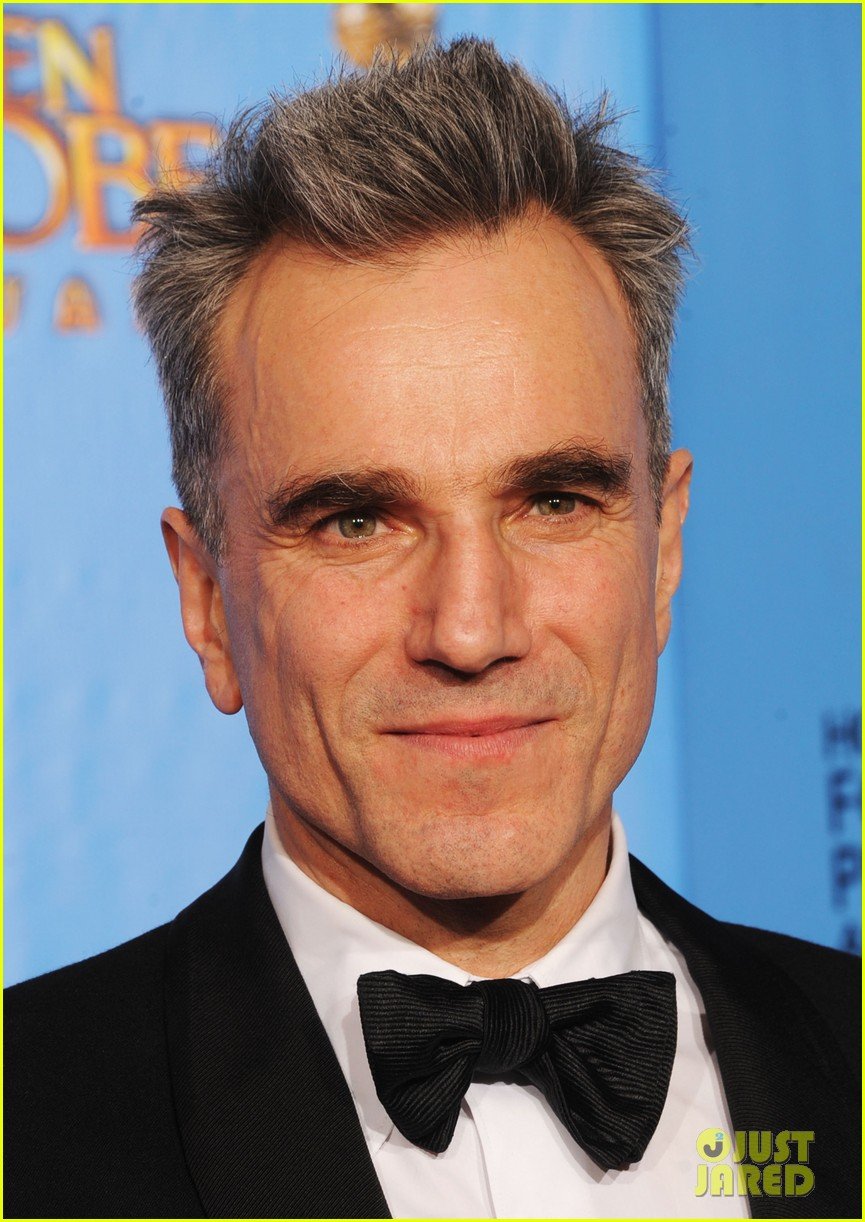
Daniel Day Lewis- Best actor
One of the most acclaimed actors of his generation, his work has earned numerous awards, including five nominations for the Academy Award for Best Actor, in which he won three times, respectively, for his portrayals of Christy Brown in My Left Foot (1989), Daniel Plainview in There Will Be Blood (2007), and Abraham Lincoln in Lincoln (2012), a feat which makes him the only male actor in history to gather three wins in the leading category. Day-Lewis has also received six nominations for the BAFTA Award for Best Actor, with four wins, three Screen Actors Guild Awards, and three Critic's Choice Awards, as well as garnering seven Golden Globe nominations, winning twice.
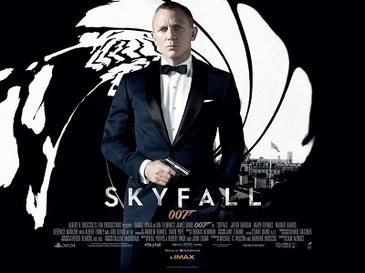
Skyfall- music and sound editing
http://m.bbc.co.uk/news/entertainment-arts-21570148
It can seem that the Oscars is shown to be a global awards show in comparison to the Baftas which is much smaller and more UK based and in comparison to most British films the Hollywood films are much more popular as they are distributed globally in comparison to most British films which are normally distributed in European countries rather than in other parts of the world.
One of the most acclaimed actors of his generation, his work has earned numerous awards, including five nominations for the Academy Award for Best Actor, in which he won three times, respectively, for his portrayals of Christy Brown in My Left Foot (1989), Daniel Plainview in There Will Be Blood (2007), and Abraham Lincoln in Lincoln (2012), a feat which makes him the only male actor in history to gather three wins in the leading category. Day-Lewis has also received six nominations for the BAFTA Award for Best Actor, with four wins, three Screen Actors Guild Awards, and three Critic's Choice Awards, as well as garnering seven Golden Globe nominations, winning twice.
Skyfall- music and sound editing
http://m.bbc.co.uk/news/entertainment-arts-21570148
It can seem that the Oscars is shown to be a global awards show in comparison to the Baftas which is much smaller and more UK based and in comparison to most British films the Hollywood films are much more popular as they are distributed globally in comparison to most British films which are normally distributed in European countries rather than in other parts of the world.
Friday, 22 February 2013
Les Miserables Case study
Directed by Tom Hooper
Produced by Tim Bevan
Eric Fellner
Debra Hayward
Cameron Mackintosh
Screenplay by William Nicholson
Alain Boublil
Claude-Michel Schönberg
Herbert Kretzmer
Based on Les Misérables by
Alain Boublil
Claude-Michel Schönberg
Starring Hugh Jackman
Russell Crowe
Anne Hathaway
Amanda Seyfried
Eddie Redmayne
Helena Bonham Carter
Sacha Baron Cohen
Music by Claude-Michel Schönberg
Cinematography Danny Cohen
Editing by Melanie Ann Oliver
Chris Dickens
Studio Working Title Films
Cameron Mackintosh Ltd.
Relativity Media
Distributed by Universal Pictures
Release date(s)
5 December 2012 (London, premiere)
11 January 2013 (United Kingdom)
Running time 158 minutes
Country United Kingdom
Language English
Budget $61 million
Box office $379,064,425
Les Misérables is a 2012 British musical drama film produced by Working Title Films and distributed by Universal Pictures. The film is based on the musical of the same name by Alain Boublil and Claude-Michel Schönberg which is in turn based on Les Misérables, the 1862 French novel by Victor Hugo. The film is directed by Tom Hooper, scripted by William Nicholson, Boublil, Schönberg and Herbert Kretzmer, and stars an ensemble cast led by Hugh Jackman, Russell Crowe, Anne Hathaway, and Amanda Seyfried. The film tells the story of Jean Valjean, an ex-convict who becomes mayor of a town in France. Soon exposed, Valjean agrees to take care of Cosette, the illegitimate daughter of the dying Fantine, but as a fugitive must also avoid being captured again by police inspector Javert. The plot spans 17 years and is set against a backdrop of political turmoil, which in the film culminates in the June Rebellion of France.
Development of Les Misérables based on the stage musical began in the late 1980s. After the musical's 25th Anniversary concert in October 2010, producer Cameron Mackintosh announced that the film resumed development. Hooper and Nicholson were approached in March 2011 and the main characters were cast in 2011. Principal photography commenced in March 2012, and took place in various locations including Greenwich, London, Winchester and Portsmouth in Hampshire, England, as well as Gourdon, in France.
Les Misérables premiered in London on 5 December 2012, and was released on 25 December 2012 in the United States, on 26 December 2012 in Australia, and on 11 January 2013 in the United Kingdom. The film has received divided, but generally positive reviews, with many critics praising the cast, especially the acting of Hugh Jackman and Anne Hathaway. The film won the Golden Globe Award for Best Motion Picture – Musical or Comedy, the Golden Globe Award for Best Actor – Motion Picture Musical or Comedy for Jackman and the Golden Globe Award for Best Supporting Actress – Motion Picture for Hathaway. It has also won four BAFTA Awards, including the Best Actress in a Supporting Role (Hathaway). It has received eight Academy Award nominations that include Best Picture (the first musical nominated since 2002's winner Chicago), Best Actor for Jackman and Best Supporting Actress for Hathaway.
Production
Development
In 1988, Alan Parker was considered to direct a film adaptation of the Les Misérables musical. However, in 1991, Bruce Beresford signed on to be the film's director.
In 1992, producer Cameron Mackintosh announced that the film would be co-produced by TriStar Pictures. However, the film was abandoned, leaving it stuck in development hell. In 2005, Mackintosh later confirmed that interest in turning the musical into a film adaptation had resumed during the early months of that year. Mackintosh said that he wanted the film to be directed by "someone who has a vision for the show that will put the show's original team, including [Mackintosh], back to work." He also said that he wanted the film audiences to make it "fresh as the actual show [itself]."In 2009, producer Eric Fellner began negotiations with Mackintosh to acquire the film's rights and concluded it near the end of 2011. Fellner, Tim Bevan, and Debra Hayward engaged William Nicholson to write a screenplay for the film. Nicholson wrote the draft within six weeks time.
The DVD/Blu-ray release of Les Misérables: 25th Anniversary Concert confirmed an announcement of the musical's film adaptation. Mackintosh then stated at a press conference that the plans for the film adaptation were being made.
Pre-production
In March 2011, director Tom Hooper began negotiations to direct Les Misérables from the screenplay by William Nicholson. Production on the film officially began in June that year, with Cameron Mackintosh and Working Title Films co-producing. Having already approached Hooper prior to production with the desire of playing Jean Valjean, Hugh Jackman began negotiations to star in the film alongside Paul Bettany as Javert.Other stars that became attached to the project were Anne Hathaway and Helena Bonham Carter.
In September 2011, Jackman was officially cast as Jean Valjean and Russell Crowe was cast as Javert. The following month, Mackintosh confirmed that Hathaway would play Fantine. For the role, Hathaway allowed her hair to be cut short into a pixie cut on camera for a scene in which her character sells her hair, stating that the lengths she goes to for her roles "don't feel like sacrifices. Getting to transform is one of the best parts of [acting]." The role also required her to lose 25 pounds.
In November 2011, Eddie Redmayne joined the cast as Marius Pontmercy. It was also reported that the shortlist of actresses for the role of Éponine included Scarlett Johansson - who also auditioned for the role of Fantine -, Lea Michele, Taylor Swift, and Evan Rachel Wood. In January 2012, the press reported that Taylor Swift had been officially offered the part, but Swift later revealed that these reports were not entirely accurate. At the end of the month, Cameron Mackintosh made a special appearance during the curtain call of the Oliver! UK tour at the Palace Theatre, Manchester, announcing that the tour's Nancy, Samantha Barks, who had played Éponine in the West End production and in the 25th Anniversary concert, would reprise the role in the film. Barks had been auditioning for 15 weeks up to that point.
Originally, an unknown was sought for the role of Cosette, with an open casting call taking place in New York City in December 2011. However, in January 2012 reports surfaced that Amanda Seyfried had been offered the role instead. Eddie Redmayne confirmed both Seyfried's casting and that of Helena Bonham Carter as Madame Thénardier in an interview on 12 January. Hooper confirmed that he would stick to the musical's essentially sung-through form and would thus introduce very little additional dialogue. Hooper also confirmed that the film would not be shot in 3D, expressing his opinion that it would not enhance the emotional narrative of the film and would distract audiences from the storytelling.
Following this announcement, reports surfaced in the press that Sacha Baron Cohen had begun talks to join the the cast as Thénardier and that Aaron Tveit had been cast as Enjolras.bLater that month, the press officially confirmed Tveit's casting as Enjolras. Later, Colm Wilkinson and Frances Ruffelle (the original Valjean and Éponine, respectively, in the West End and Broadway productions) had cameos in the film, with Wilkinson playing the Bishop of Digne and Ruffelle playing a prostitute. George Blagden was also cast, as Grantaire. In an interview with BBC Radio 4's Front Row, Tom Hooper revealed that Claude-Michel Schönberg will be composing one new song and additional music. The director also expanded on the performers singing live on set, which he felt would eliminate the need to recapture "locked" performances and allow more creative freedom. More details of this were confirmed by Eddie Redmayne in an interview. He stated that the cast would sing to piano tracks (via earpiece) and that the orchestra would be added in post-production.
In February 2012, casting auditions involving extras for the film took place at the University of Portsmouth and Chatham Maritime in Chatham. Several days later, Mackintosh officially confirmed that Bonham Carter would play Madame Thénardier. He also announced that the title of the newly created song for the film is "Suddenly" and that it "beautifully explains what happens when Valjean takes Cosette from the inn and looks after her." At the end of the month, The Sun reported that the long-rumoured Baron Cohen had been cast in the role of Monsieur Thénardier.
The cast began rehearsals in January 2012, with principal photography due to begin in March. The press officially confirmed Baron Cohen's casting during the latter month. No table read took place before filming.
Filming
Tom Hooper directing the second unit of Les Misérables on location in Winchester in April 2012.
With a production budget of $61 million, principal photography of the film began on 8 March 2012 in Gourdon, in France. Filming locations also included Winchester College, Winchester Cathedral Close, Her Majesty's Naval Base Portsmouth, Oxford, St Mary the Virgin Church in Ewelme, South Oxfordshire and Pinewood Studios in England. In April 2012, a replica of the Elephant of the Bastille was constructed in Greenwich. In the novel, Gavroche lives in the decaying monument. Footage of Anne Hathaway singing "I Dreamed a Dream", a song from the musical, was shown at CinemaCon on 26 April 2012. On 5 June 2012, Russell Crowe confirmed on Twitter that he had finished filming. He was later followed by Samantha Barks, confirming that all of her scenes had too been completed. On 23 June 2012, Hugh Jackman confirmed that all filming had been completed. Some late filming was carried out in Bath, Somerset, in October 2012 where stunt shots for Javert's suicide scene had to be reshot due to an error found with this footage during post-production. Bath was not the original filming location for this scene, but the late footage was captured at Pulteney Weir, which is unmistakable in the film.
Post-production
The film's vocals were recorded live on set using live piano accompaniments played through earpieces as a guide, with the orchestral accompaniment recorded in post-production, rather than the traditional method where the film's musical soundtracks are usually pre-recorded and played back on set to which actors lip-sync. Production sound mixer Simon Hayes used 50 DPA 4071 lavalier microphones to record the vocals. Hooper explained his choice:
" I just felt ultimately, it was a more natural way of doing it. You know, when actors do dialogue, they have freedom in time, they have freedom in pacing. They can stop for a moment, they can speed up. I simply wanted to give the actors the normal freedoms that they would have. If they need a bit for an emotion or a feeling to form in the eyes before they sing, I can take that time. If they cry, they can cry through a song. When you’re doing it to playback, to the millisecond you have to copy what you do. You have no freedom in the moment – and acting is the illusion of being free in the moment.”
Although this unique live recording method has been stated as "a world's first" by the creative team, several film musicals have used this method before, including early talkies, as lip-syncing wasn't perfected, the 1975 20th Century Fox film At Long Last Love and more recently in the 1995 adaptation of The Fantasticks,in the 2001 film version of Hedwig and the Angry Inch and in the 2007 film Across the Universe with songs by The Beatles. On 27 August 2012, it was announced that recording sessions for Les Misérables would begin in London on 10 October and featured a 70-piece orchestra. It was also announced that composer Claude-Michel Schönberg was working on writing additional music to underscore the film. On 9 September 2012, Universal Studios executives were granted a viewing of the rough cut of the film without the orchestra. The cut was greeted with "extreme excitement," and Russell Crowe tweeted that he received many excited emails.
Marketing
On 30 May 2012, the film's first teaser trailer debuted online, and later in theatres with Snow White and the Huntsman.[85]
On 20 September 2012, an extended first look was released on the film's official Facebook page. This short introduces and explains Hooper's method of recording vocals live on set, and compares it to the traditional method of pre-recording the vocals in a studio months in advance. Hugh Jackman stated that filming in this way allows him more creative freedom with the material and that he "only has to worry about acting it." Both Hooper and the actors believe that this choice of production method will make the film feel much more emotional, raw, and real. The actors praised Hooper for his method and provide brief interviews throughout the video. Hooper mentions, "I thought it was an amazing opportunity to do something genuinely groundbreaking."Bits of Jackman, Anne Hathaway, Amanda Seyfried, Eddie Redmayne, and Samantha Barks singing were received very positively, especially the teaser trailer's presentation of "I Dreamed a Dream" by Hathaway.
On 24 September 2012, a new poster for the film was released on the film's official Facebook page. The poster featured young Cosette, played by Isabelle Allen. Posters featuring Jean Valjean, Javert, Fantine, and Cosette were later released on 12 October, with further posters of Thénardiers and Marius released on 1 November.
Release
Les Misérables was originally going to be released on 7 December 2012 before it was moved to 14 December. However, on 18 September 2012, the film's release date was moved again to 25 December 2012, so as not to conflict with the opening of The Hobbit: An Unexpected Journey, which opened on 14 December. Because of this, it opened alongside Django Unchained. Release date for the United Kingdom was 11 January 2013.
On 23 November 2012, Les Misérables was screened for the first time at the Lincoln Center in New York City, which received a standing ovation from the crowd. This was followed by a screening the next day in Los Angeles, which also received positive reviews.
Les Misérables premiered on 5 December at the Empire, Leicester Square in London.Red carpet footage was screened live online in an event hosted by Michael Ball, the original Marius of the West End. The film was released in select IMAX theatres in New York, Los Angeles, Toronto, and Montreal the same day as its domestic theatrical release on 25 December 2012. Les Misérables was later released in international IMAX theatres, beginning on 10 January 2013.
Home media
The film is confirmed for a 22 March 2013 home release on DVD, Blu-ray, and VOD. The DVD will contain three featurettes-The Stars of Les Miserables, Creating the Perfect Paris, and The Original Masterwork: Victor Hugo's Les Miserables-along with an audio commentary from director Tom Hooper. The Blu-ray contains all DVD features including four additional featurettes-Les Miserables Singing Live, Battle at the Barricade, The West End Connection, and Les Miserables On Location.
Box office
As of 19 February 2013, Les Misérables earned $145,764,425 in North America and $233,300,000 in other territories for a worldwide total of $379,064,425. In North America, Les Misérables opened on 25 December 2012 in 2,808 theatres placing first at the box office with $18.1 million. This amount broke the record for the highest opening day gross for a musical film, previously held by High School Musical 3: Senior Year, and was also the second highest opening day gross for a film released on Christmas Day. It earned $27.3 million in its opening weekend, placing third behind Django Unchained and The Hobbit: An Unexpected Journey.
The film was released in the United Kingdom on 11 January 2013 and earned £8.1 ($13.1) million in its opening weekend, making it the largest opening weekend for a musical film, as well as Working Title.
Critical response
Les Misérables has received mostly favourable reviews; the film review aggregator website Rotten Tomatoes sampled 212 reviews and judged 70% of them to be positive. On Metacritic, the film achieved an average score of 63 out of 100 based on 40 reviews, signifying "generally favourable reviews".
Robbie Collin of the Daily Telegraph gave the film five stars, saying: "Les Misérables is a blockbuster, and the special effects are emotional: explosions of grief; fireballs of romance; million-buck conflagrations of heartbreak. Accordingly, you should see it in its opening week, on a gigantic screen, with a fanatical crowd." The Guardian's Peter Bradshaw concurred: "Even as a non-believer in this kind of "sung-through" musical, I was battered into submission by this mesmeric and sometimes compelling film ...". Kenneth Turan of the Los Angeles Times gave a positive review, saying that the film "is a clutch player that delivers an emotional wallop when it counts. You can walk into the theater as an agnostic, but you may just leave singing with the choir."Peter Travers of Rolling Stone said, "Besides being a feast for the eyes and ears, Les Misérables overflows with humor, heartbreak, rousing action and ravishing romance. Damn the imperfections, it's perfectly marvelous.
Todd McCarthy of The Hollywood Reporter said, "As the enduring success of this property has shown, there are large, emotionally susceptible segments of the population ready to swallow this sort of thing, but that doesn't mean it's good."Manohla Dargis of The New York Times said that "[Director Tom] Hooper can be very good with actors. But his inability to leave any lily ungilded—to direct a scene without tilting or hurtling or throwing the camera around—is bludgeoning and deadly. By the grand finale, when tout le monde is waving the French tricolor in victory, you may instead be raising the white flag in exhausted defeat."Justin Chang of Variety had mixed feelings for the film, saying that it "will more than satisfy the show's legions of fans." Chang praised the performances of Jackman, Hathaway, Barks, Tveit and Seyfried (i.e., every leading cast member except Crowe) but said that the film's editing "seems reluctant to slow down and let the viewer simply take in the performances."
Regardless of the reviewer's overall opinion of the film, many of the specific performances were cited for acclaim, particularly that of Anne Hathaway. Hathaway's performance of ballad "I Dreamed a Dream" was met with praise, with many comparing its showstopper-like quality to Jennifer Hudson's Oscar-winning performance of "And I Am Telling You I'm Not Going" from the film Dreamgirls. Christopher Orr from The Atlantic wrote that "Hathaway gives it everything she has, beginning in quiet sorrow before building to a woebegone climax: she gasps, she weeps, she coughs. If you are blown away by the scene—as many will be; it will almost certainly earn Hathaway her first Oscar—this may be the film for you."Ann Hornaday of The Washington Post writes that "The centerpiece of a movie composed entirely of centerpieces belongs to Anne Hathaway, who as the tragic heroine Fantine sings another of the memorable numbers". Joy Tipping from Dallas Morning News described her performance as "angelic". Claudia Puig from USA Today describes her as "superb as the tragic Fantine". Travers felt that "A dynamite Hathaway shatters every heart when she sings how 'life has killed the dream I dreamed.' Her volcanic performance has Oscar written all over it."Lou Lumenick from the New York Post has said that the film is "worth seeing for Hathaway alone".She is widely considered to be the frontrunner for the Academy Award for Best Supporting Actress.
Eddie Redmayne has also received considerable praise for his performance with Bloomberg News saying that "Eddie Redmayne—most recently seen as the eager young production assistant in My Week with Marilyn—delivers by far the most moving and memorable performance in the film as the young firebrand Marius, who, along with his fellow students, is caught up in France's political upheavals in the 19th century."
Samantha Barks also received praise for her portrayal of Éponine, with Digital Journal saying: "Samantha Barks plays Éponine with such grace, sweetness, and sadness that it is hard to imagine anyone else in the role", while Claudia Puig of USA Today calls her "heartbreakingly soulful", Richard Roeper of The Chicago Sun-Times describes her performance as "star-making", and Roger Friedman of Showbiz411.com says she "just about steals the film".
Hugh Jackman's performance as Jean Valjean has also been critically acclaimed. Wesley Morris of BostonGlobe.com says, "the charisma’s been stripped to the bone, and it’s a thrilling confirmation of the other kind of star Jackman is". Lisa Kennedy of denverpost.com describes Jackman's performance as "bringing depth to Valjean's tale of offence and grace, of taking responsibility for a child and then letting go," and also says his rendition of "Bring Him Home" has "emotional heft".
Amanda Seyfried has also been praised for her lovable but short performance as Cosette, PasteMagazine.com says "Amanda Seyfried is excellent as the young, idealist loving girl who's life changes dramatically in the 1832 June uprising in Paris", ListFilm says "out of her comes a pretty voice, which is lent urgency by the decision to have the actors sing live on set rather than lip-sync to studio recordings", ViewLondon says she "held her own in a nice way, even if she's largely outsung by her co-stars", Express says she "provides the picture it's romantic heart", and ReelzChannel called her a stand-out performance.
On 10 January 2013, it was announced that the film was nominated for eight Academy Awards, including the Best Picture, Best Actor in a Leading Role for Jackman, and Best Supporting Actress for Hathaway. The winners will be announced on 24 February.
Produced by Tim Bevan
Eric Fellner
Debra Hayward
Cameron Mackintosh
Screenplay by William Nicholson
Alain Boublil
Claude-Michel Schönberg
Herbert Kretzmer
Based on Les Misérables by
Alain Boublil
Claude-Michel Schönberg
Starring Hugh Jackman
Russell Crowe
Anne Hathaway
Amanda Seyfried
Eddie Redmayne
Helena Bonham Carter
Sacha Baron Cohen
Music by Claude-Michel Schönberg
Cinematography Danny Cohen
Editing by Melanie Ann Oliver
Chris Dickens
Studio Working Title Films
Cameron Mackintosh Ltd.
Relativity Media
Distributed by Universal Pictures
Release date(s)
5 December 2012 (London, premiere)
11 January 2013 (United Kingdom)
Running time 158 minutes
Country United Kingdom
Language English
Budget $61 million
Box office $379,064,425
Les Misérables is a 2012 British musical drama film produced by Working Title Films and distributed by Universal Pictures. The film is based on the musical of the same name by Alain Boublil and Claude-Michel Schönberg which is in turn based on Les Misérables, the 1862 French novel by Victor Hugo. The film is directed by Tom Hooper, scripted by William Nicholson, Boublil, Schönberg and Herbert Kretzmer, and stars an ensemble cast led by Hugh Jackman, Russell Crowe, Anne Hathaway, and Amanda Seyfried. The film tells the story of Jean Valjean, an ex-convict who becomes mayor of a town in France. Soon exposed, Valjean agrees to take care of Cosette, the illegitimate daughter of the dying Fantine, but as a fugitive must also avoid being captured again by police inspector Javert. The plot spans 17 years and is set against a backdrop of political turmoil, which in the film culminates in the June Rebellion of France.
Development of Les Misérables based on the stage musical began in the late 1980s. After the musical's 25th Anniversary concert in October 2010, producer Cameron Mackintosh announced that the film resumed development. Hooper and Nicholson were approached in March 2011 and the main characters were cast in 2011. Principal photography commenced in March 2012, and took place in various locations including Greenwich, London, Winchester and Portsmouth in Hampshire, England, as well as Gourdon, in France.
Les Misérables premiered in London on 5 December 2012, and was released on 25 December 2012 in the United States, on 26 December 2012 in Australia, and on 11 January 2013 in the United Kingdom. The film has received divided, but generally positive reviews, with many critics praising the cast, especially the acting of Hugh Jackman and Anne Hathaway. The film won the Golden Globe Award for Best Motion Picture – Musical or Comedy, the Golden Globe Award for Best Actor – Motion Picture Musical or Comedy for Jackman and the Golden Globe Award for Best Supporting Actress – Motion Picture for Hathaway. It has also won four BAFTA Awards, including the Best Actress in a Supporting Role (Hathaway). It has received eight Academy Award nominations that include Best Picture (the first musical nominated since 2002's winner Chicago), Best Actor for Jackman and Best Supporting Actress for Hathaway.
Production
Development
In 1988, Alan Parker was considered to direct a film adaptation of the Les Misérables musical. However, in 1991, Bruce Beresford signed on to be the film's director.
In 1992, producer Cameron Mackintosh announced that the film would be co-produced by TriStar Pictures. However, the film was abandoned, leaving it stuck in development hell. In 2005, Mackintosh later confirmed that interest in turning the musical into a film adaptation had resumed during the early months of that year. Mackintosh said that he wanted the film to be directed by "someone who has a vision for the show that will put the show's original team, including [Mackintosh], back to work." He also said that he wanted the film audiences to make it "fresh as the actual show [itself]."In 2009, producer Eric Fellner began negotiations with Mackintosh to acquire the film's rights and concluded it near the end of 2011. Fellner, Tim Bevan, and Debra Hayward engaged William Nicholson to write a screenplay for the film. Nicholson wrote the draft within six weeks time.
The DVD/Blu-ray release of Les Misérables: 25th Anniversary Concert confirmed an announcement of the musical's film adaptation. Mackintosh then stated at a press conference that the plans for the film adaptation were being made.
Pre-production
In March 2011, director Tom Hooper began negotiations to direct Les Misérables from the screenplay by William Nicholson. Production on the film officially began in June that year, with Cameron Mackintosh and Working Title Films co-producing. Having already approached Hooper prior to production with the desire of playing Jean Valjean, Hugh Jackman began negotiations to star in the film alongside Paul Bettany as Javert.Other stars that became attached to the project were Anne Hathaway and Helena Bonham Carter.
In September 2011, Jackman was officially cast as Jean Valjean and Russell Crowe was cast as Javert. The following month, Mackintosh confirmed that Hathaway would play Fantine. For the role, Hathaway allowed her hair to be cut short into a pixie cut on camera for a scene in which her character sells her hair, stating that the lengths she goes to for her roles "don't feel like sacrifices. Getting to transform is one of the best parts of [acting]." The role also required her to lose 25 pounds.
In November 2011, Eddie Redmayne joined the cast as Marius Pontmercy. It was also reported that the shortlist of actresses for the role of Éponine included Scarlett Johansson - who also auditioned for the role of Fantine -, Lea Michele, Taylor Swift, and Evan Rachel Wood. In January 2012, the press reported that Taylor Swift had been officially offered the part, but Swift later revealed that these reports were not entirely accurate. At the end of the month, Cameron Mackintosh made a special appearance during the curtain call of the Oliver! UK tour at the Palace Theatre, Manchester, announcing that the tour's Nancy, Samantha Barks, who had played Éponine in the West End production and in the 25th Anniversary concert, would reprise the role in the film. Barks had been auditioning for 15 weeks up to that point.
Originally, an unknown was sought for the role of Cosette, with an open casting call taking place in New York City in December 2011. However, in January 2012 reports surfaced that Amanda Seyfried had been offered the role instead. Eddie Redmayne confirmed both Seyfried's casting and that of Helena Bonham Carter as Madame Thénardier in an interview on 12 January. Hooper confirmed that he would stick to the musical's essentially sung-through form and would thus introduce very little additional dialogue. Hooper also confirmed that the film would not be shot in 3D, expressing his opinion that it would not enhance the emotional narrative of the film and would distract audiences from the storytelling.
Following this announcement, reports surfaced in the press that Sacha Baron Cohen had begun talks to join the the cast as Thénardier and that Aaron Tveit had been cast as Enjolras.bLater that month, the press officially confirmed Tveit's casting as Enjolras. Later, Colm Wilkinson and Frances Ruffelle (the original Valjean and Éponine, respectively, in the West End and Broadway productions) had cameos in the film, with Wilkinson playing the Bishop of Digne and Ruffelle playing a prostitute. George Blagden was also cast, as Grantaire. In an interview with BBC Radio 4's Front Row, Tom Hooper revealed that Claude-Michel Schönberg will be composing one new song and additional music. The director also expanded on the performers singing live on set, which he felt would eliminate the need to recapture "locked" performances and allow more creative freedom. More details of this were confirmed by Eddie Redmayne in an interview. He stated that the cast would sing to piano tracks (via earpiece) and that the orchestra would be added in post-production.
In February 2012, casting auditions involving extras for the film took place at the University of Portsmouth and Chatham Maritime in Chatham. Several days later, Mackintosh officially confirmed that Bonham Carter would play Madame Thénardier. He also announced that the title of the newly created song for the film is "Suddenly" and that it "beautifully explains what happens when Valjean takes Cosette from the inn and looks after her." At the end of the month, The Sun reported that the long-rumoured Baron Cohen had been cast in the role of Monsieur Thénardier.
The cast began rehearsals in January 2012, with principal photography due to begin in March. The press officially confirmed Baron Cohen's casting during the latter month. No table read took place before filming.
Filming
Tom Hooper directing the second unit of Les Misérables on location in Winchester in April 2012.
With a production budget of $61 million, principal photography of the film began on 8 March 2012 in Gourdon, in France. Filming locations also included Winchester College, Winchester Cathedral Close, Her Majesty's Naval Base Portsmouth, Oxford, St Mary the Virgin Church in Ewelme, South Oxfordshire and Pinewood Studios in England. In April 2012, a replica of the Elephant of the Bastille was constructed in Greenwich. In the novel, Gavroche lives in the decaying monument. Footage of Anne Hathaway singing "I Dreamed a Dream", a song from the musical, was shown at CinemaCon on 26 April 2012. On 5 June 2012, Russell Crowe confirmed on Twitter that he had finished filming. He was later followed by Samantha Barks, confirming that all of her scenes had too been completed. On 23 June 2012, Hugh Jackman confirmed that all filming had been completed. Some late filming was carried out in Bath, Somerset, in October 2012 where stunt shots for Javert's suicide scene had to be reshot due to an error found with this footage during post-production. Bath was not the original filming location for this scene, but the late footage was captured at Pulteney Weir, which is unmistakable in the film.
Post-production
The film's vocals were recorded live on set using live piano accompaniments played through earpieces as a guide, with the orchestral accompaniment recorded in post-production, rather than the traditional method where the film's musical soundtracks are usually pre-recorded and played back on set to which actors lip-sync. Production sound mixer Simon Hayes used 50 DPA 4071 lavalier microphones to record the vocals. Hooper explained his choice:
" I just felt ultimately, it was a more natural way of doing it. You know, when actors do dialogue, they have freedom in time, they have freedom in pacing. They can stop for a moment, they can speed up. I simply wanted to give the actors the normal freedoms that they would have. If they need a bit for an emotion or a feeling to form in the eyes before they sing, I can take that time. If they cry, they can cry through a song. When you’re doing it to playback, to the millisecond you have to copy what you do. You have no freedom in the moment – and acting is the illusion of being free in the moment.”
Although this unique live recording method has been stated as "a world's first" by the creative team, several film musicals have used this method before, including early talkies, as lip-syncing wasn't perfected, the 1975 20th Century Fox film At Long Last Love and more recently in the 1995 adaptation of The Fantasticks,in the 2001 film version of Hedwig and the Angry Inch and in the 2007 film Across the Universe with songs by The Beatles. On 27 August 2012, it was announced that recording sessions for Les Misérables would begin in London on 10 October and featured a 70-piece orchestra. It was also announced that composer Claude-Michel Schönberg was working on writing additional music to underscore the film. On 9 September 2012, Universal Studios executives were granted a viewing of the rough cut of the film without the orchestra. The cut was greeted with "extreme excitement," and Russell Crowe tweeted that he received many excited emails.
Marketing
On 30 May 2012, the film's first teaser trailer debuted online, and later in theatres with Snow White and the Huntsman.[85]
On 20 September 2012, an extended first look was released on the film's official Facebook page. This short introduces and explains Hooper's method of recording vocals live on set, and compares it to the traditional method of pre-recording the vocals in a studio months in advance. Hugh Jackman stated that filming in this way allows him more creative freedom with the material and that he "only has to worry about acting it." Both Hooper and the actors believe that this choice of production method will make the film feel much more emotional, raw, and real. The actors praised Hooper for his method and provide brief interviews throughout the video. Hooper mentions, "I thought it was an amazing opportunity to do something genuinely groundbreaking."Bits of Jackman, Anne Hathaway, Amanda Seyfried, Eddie Redmayne, and Samantha Barks singing were received very positively, especially the teaser trailer's presentation of "I Dreamed a Dream" by Hathaway.
On 24 September 2012, a new poster for the film was released on the film's official Facebook page. The poster featured young Cosette, played by Isabelle Allen. Posters featuring Jean Valjean, Javert, Fantine, and Cosette were later released on 12 October, with further posters of Thénardiers and Marius released on 1 November.
Release
Les Misérables was originally going to be released on 7 December 2012 before it was moved to 14 December. However, on 18 September 2012, the film's release date was moved again to 25 December 2012, so as not to conflict with the opening of The Hobbit: An Unexpected Journey, which opened on 14 December. Because of this, it opened alongside Django Unchained. Release date for the United Kingdom was 11 January 2013.
On 23 November 2012, Les Misérables was screened for the first time at the Lincoln Center in New York City, which received a standing ovation from the crowd. This was followed by a screening the next day in Los Angeles, which also received positive reviews.
Les Misérables premiered on 5 December at the Empire, Leicester Square in London.Red carpet footage was screened live online in an event hosted by Michael Ball, the original Marius of the West End. The film was released in select IMAX theatres in New York, Los Angeles, Toronto, and Montreal the same day as its domestic theatrical release on 25 December 2012. Les Misérables was later released in international IMAX theatres, beginning on 10 January 2013.
Home media
The film is confirmed for a 22 March 2013 home release on DVD, Blu-ray, and VOD. The DVD will contain three featurettes-The Stars of Les Miserables, Creating the Perfect Paris, and The Original Masterwork: Victor Hugo's Les Miserables-along with an audio commentary from director Tom Hooper. The Blu-ray contains all DVD features including four additional featurettes-Les Miserables Singing Live, Battle at the Barricade, The West End Connection, and Les Miserables On Location.
Box office
As of 19 February 2013, Les Misérables earned $145,764,425 in North America and $233,300,000 in other territories for a worldwide total of $379,064,425. In North America, Les Misérables opened on 25 December 2012 in 2,808 theatres placing first at the box office with $18.1 million. This amount broke the record for the highest opening day gross for a musical film, previously held by High School Musical 3: Senior Year, and was also the second highest opening day gross for a film released on Christmas Day. It earned $27.3 million in its opening weekend, placing third behind Django Unchained and The Hobbit: An Unexpected Journey.
The film was released in the United Kingdom on 11 January 2013 and earned £8.1 ($13.1) million in its opening weekend, making it the largest opening weekend for a musical film, as well as Working Title.
Critical response
Les Misérables has received mostly favourable reviews; the film review aggregator website Rotten Tomatoes sampled 212 reviews and judged 70% of them to be positive. On Metacritic, the film achieved an average score of 63 out of 100 based on 40 reviews, signifying "generally favourable reviews".
Robbie Collin of the Daily Telegraph gave the film five stars, saying: "Les Misérables is a blockbuster, and the special effects are emotional: explosions of grief; fireballs of romance; million-buck conflagrations of heartbreak. Accordingly, you should see it in its opening week, on a gigantic screen, with a fanatical crowd." The Guardian's Peter Bradshaw concurred: "Even as a non-believer in this kind of "sung-through" musical, I was battered into submission by this mesmeric and sometimes compelling film ...". Kenneth Turan of the Los Angeles Times gave a positive review, saying that the film "is a clutch player that delivers an emotional wallop when it counts. You can walk into the theater as an agnostic, but you may just leave singing with the choir."Peter Travers of Rolling Stone said, "Besides being a feast for the eyes and ears, Les Misérables overflows with humor, heartbreak, rousing action and ravishing romance. Damn the imperfections, it's perfectly marvelous.
Todd McCarthy of The Hollywood Reporter said, "As the enduring success of this property has shown, there are large, emotionally susceptible segments of the population ready to swallow this sort of thing, but that doesn't mean it's good."Manohla Dargis of The New York Times said that "[Director Tom] Hooper can be very good with actors. But his inability to leave any lily ungilded—to direct a scene without tilting or hurtling or throwing the camera around—is bludgeoning and deadly. By the grand finale, when tout le monde is waving the French tricolor in victory, you may instead be raising the white flag in exhausted defeat."Justin Chang of Variety had mixed feelings for the film, saying that it "will more than satisfy the show's legions of fans." Chang praised the performances of Jackman, Hathaway, Barks, Tveit and Seyfried (i.e., every leading cast member except Crowe) but said that the film's editing "seems reluctant to slow down and let the viewer simply take in the performances."
Regardless of the reviewer's overall opinion of the film, many of the specific performances were cited for acclaim, particularly that of Anne Hathaway. Hathaway's performance of ballad "I Dreamed a Dream" was met with praise, with many comparing its showstopper-like quality to Jennifer Hudson's Oscar-winning performance of "And I Am Telling You I'm Not Going" from the film Dreamgirls. Christopher Orr from The Atlantic wrote that "Hathaway gives it everything she has, beginning in quiet sorrow before building to a woebegone climax: she gasps, she weeps, she coughs. If you are blown away by the scene—as many will be; it will almost certainly earn Hathaway her first Oscar—this may be the film for you."Ann Hornaday of The Washington Post writes that "The centerpiece of a movie composed entirely of centerpieces belongs to Anne Hathaway, who as the tragic heroine Fantine sings another of the memorable numbers". Joy Tipping from Dallas Morning News described her performance as "angelic". Claudia Puig from USA Today describes her as "superb as the tragic Fantine". Travers felt that "A dynamite Hathaway shatters every heart when she sings how 'life has killed the dream I dreamed.' Her volcanic performance has Oscar written all over it."Lou Lumenick from the New York Post has said that the film is "worth seeing for Hathaway alone".She is widely considered to be the frontrunner for the Academy Award for Best Supporting Actress.
Eddie Redmayne has also received considerable praise for his performance with Bloomberg News saying that "Eddie Redmayne—most recently seen as the eager young production assistant in My Week with Marilyn—delivers by far the most moving and memorable performance in the film as the young firebrand Marius, who, along with his fellow students, is caught up in France's political upheavals in the 19th century."
Samantha Barks also received praise for her portrayal of Éponine, with Digital Journal saying: "Samantha Barks plays Éponine with such grace, sweetness, and sadness that it is hard to imagine anyone else in the role", while Claudia Puig of USA Today calls her "heartbreakingly soulful", Richard Roeper of The Chicago Sun-Times describes her performance as "star-making", and Roger Friedman of Showbiz411.com says she "just about steals the film".
Hugh Jackman's performance as Jean Valjean has also been critically acclaimed. Wesley Morris of BostonGlobe.com says, "the charisma’s been stripped to the bone, and it’s a thrilling confirmation of the other kind of star Jackman is". Lisa Kennedy of denverpost.com describes Jackman's performance as "bringing depth to Valjean's tale of offence and grace, of taking responsibility for a child and then letting go," and also says his rendition of "Bring Him Home" has "emotional heft".
Amanda Seyfried has also been praised for her lovable but short performance as Cosette, PasteMagazine.com says "Amanda Seyfried is excellent as the young, idealist loving girl who's life changes dramatically in the 1832 June uprising in Paris", ListFilm says "out of her comes a pretty voice, which is lent urgency by the decision to have the actors sing live on set rather than lip-sync to studio recordings", ViewLondon says she "held her own in a nice way, even if she's largely outsung by her co-stars", Express says she "provides the picture it's romantic heart", and ReelzChannel called her a stand-out performance.
On 10 January 2013, it was announced that the film was nominated for eight Academy Awards, including the Best Picture, Best Actor in a Leading Role for Jackman, and Best Supporting Actress for Hathaway. The winners will be announced on 24 February.
The Best Exotic Marigold Hotel
Directed by John Madden
Produced by Graham Broadbent
Peter Czernin
Screenplay by Ol Parker
Based on These Foolish Things by
Deborah Moggach
Starring [clarification needed]
Judi Dench
Bill Nighy
Penelope Wilton
Maggie Smith
Tom Wilkinson
Ronald Pickup
Celia Imrie
Dev Patel
Music by Thomas Newman
Cinematography Ben Davis
Editing by Chris Gill
Studio Participant Media
Imagenation Abu Dhabi FZ
Blueprint Pictures
Distributed by 20th Century Fox
Release date(s)
30 November 2011 (SIIdC)
24 February 2012 (United Kingdom)
Running time 124 minutes
Country United Kingdom
Language English
Budget $10 million
Box office $134,388,807
The Best Exotic Marigold Hotel is a 2012 British comedy-drama film, directed by John Madden. The screenplay, written by Ol Parker, was based on the 2004 novel These Foolish Things, by Deborah Moggach, and features an ensemble cast consisting of Judi Dench, Celia Imrie, Bill Nighy, Ronald Pickup, Maggie Smith, Tom Wilkinson and Penelope Wilton, as a group of British pensioners moving to a retirement hotel in India, run by the young and eager Sonny, played by Dev Patel. The movie was produced by Participant Media and Blueprint Pictures on a budget of $10 million.
The film was released in the United Kingdom on 24 February 2012 and received critical acclaim; The Best Exotic Marigold Hotel opened to strong box-office business in the United Kingdom and continued to build worldwide. It became a surprise box-office hit following its international release, eventually grossing $134 million worldwide, mostly from its domestic run. It was ranked among the highest-grossing 2012 releases in Australia, New Zealand and the United Kingdom and the highest-grossing specialty releases of the year.
The film was first shown at the Italian cinema trade show Le Giornate Professionali di Cinema ("The Professional Days of Cinema") in Sorrento on November 30, 2011 and at the Glasgow Film Festival on 17 February 2012, before being released widely in the United Kingdom and Ireland on 24 February 2012. This was followed by release in a further 26 countries in March and April.
Box office
In the United Kingdom, The Best Exotic Marigold Hotel came in second to The Woman in Black at the box office in its first week, earning £2.2 million. It eventually topped the UK box office with £2.3 million in its second weekend on release. By the end of its UK run, the film had grossed around $31 million. Prior to its United States debut, the comedy had already grossed $69 million worldwide and passed both The Queen (2006) and Calendar Girls (2003) in total international grosses. After three months of release, it was ranked the third highest-grossing 2012 release in Australia and New Zealand behind only The Avengers and The Hunger Games and fourth-highest-grossing 2012 title in the UK.
In the United States, the film initially opened in 16 theaters in its first week. In its second week of release, it expanded from 16 to 178 screens in North America and grossed $2.7 million for the weekend, ending eighth on the week's top hits. By the end of the month, Best Exotic Marigold Hotel had amassed nearly $20 million in the Unites States and crossed $100 million in worldwide gross receipts. As of October 2012, the film has grossed $46,412,041 in North America and $87,976,766 in other territories for a total of $134,388,807. It ranks among the best international grossing film released worldwide by Fox Searchlight Pictures behind Black Swan (2010), The Full Monty (1997), and The Descendants (2011), and among the highest grossing specialty releases of the year along with Moonrise Kingdom and To Rome with Love.
Reception
Dench and Smith both received favorable reviews by critics
The film has received positive reviews by critics. The review aggregator website Rotten Tomatoes reported that 78% of critics gave the film a positive rating, based on 145 reviews, with an average score of 6.5/10. Its consensus states "The Best Exotic Marigold Hotel isn't groundbreaking storytelling, but it's a sweet story about the senior set featuring a top-notch cast of veteran actors." On Metacritic, which uses a normalized rating system, the film holds a 62/100 rating, based on 35 reviews, indicating "generally favorable reviews".
Roger Ebert, writing for the Chicago Sun-Times gave The Best Exotic Marigold Hotel three and a half out of four stars. He declared the film "a charming, funny and heartwarming movie [and] a smoothly crafted entertainment that makes good use of seven superb veterans." Claudia Puig from USA Today called it "a refreshing, mature fairy tale with a top-notch ensemble cast." While she felt the film was "about 15 minutes too long", she summarized it as "a delightful, droll and entertaining comedy of manners with an estimable cast" and an "ideal low-tech alternative to the special-effects laden" film projects of 2012.Mick LaSalle of the San Francisco Chronicle remarked that the film was "a rare reminder from movies that the grand emotions are not only for the young and the middle-aged", citing it "too well made to be dismissed and contains too much truth to be scorned."
Peter Travers from Rolling Stone rated the comedy three out of four stars. He found that "with a lesser cast, the movie would be a lineup of TV-movie clichés. But this is a cast that never makes a false move even when the script settles for formula." Chicago Tribune critic Michael Phillips wrote that "as two-hour tours go, The Best Exotic Marigold Hotel goes smoothly." While he felt that the film focused on "pleasantly predictable story", he noted that the project was one of those films which "are better off concentrating on a reassuring level of actorly craft [than] going easy on the surprises." Lisa Schwarzbaum of Entertainment Weekly graded the film with a 'B–' rating, summing it as a "lulling, happy-face story of retirement-age self-renewal, set in a shimmering, weltering, jewel-colored India." She wrote that "as a brand extender (for the senior cast, for the director, and certainly for Patel, following the grand success of Slumdog), Marigold Hotel achieves what it sets out to do: Sell something safe and sweet, in a vivid foreign setting, to an underserved share of the moviegoing market."
Produced by Graham Broadbent
Peter Czernin
Screenplay by Ol Parker
Based on These Foolish Things by
Deborah Moggach
Starring [clarification needed]
Judi Dench
Bill Nighy
Penelope Wilton
Maggie Smith
Tom Wilkinson
Ronald Pickup
Celia Imrie
Dev Patel
Music by Thomas Newman
Cinematography Ben Davis
Editing by Chris Gill
Studio Participant Media
Imagenation Abu Dhabi FZ
Blueprint Pictures
Distributed by 20th Century Fox
Release date(s)
30 November 2011 (SIIdC)
24 February 2012 (United Kingdom)
Running time 124 minutes
Country United Kingdom
Language English
Budget $10 million
Box office $134,388,807
The Best Exotic Marigold Hotel is a 2012 British comedy-drama film, directed by John Madden. The screenplay, written by Ol Parker, was based on the 2004 novel These Foolish Things, by Deborah Moggach, and features an ensemble cast consisting of Judi Dench, Celia Imrie, Bill Nighy, Ronald Pickup, Maggie Smith, Tom Wilkinson and Penelope Wilton, as a group of British pensioners moving to a retirement hotel in India, run by the young and eager Sonny, played by Dev Patel. The movie was produced by Participant Media and Blueprint Pictures on a budget of $10 million.
The film was released in the United Kingdom on 24 February 2012 and received critical acclaim; The Best Exotic Marigold Hotel opened to strong box-office business in the United Kingdom and continued to build worldwide. It became a surprise box-office hit following its international release, eventually grossing $134 million worldwide, mostly from its domestic run. It was ranked among the highest-grossing 2012 releases in Australia, New Zealand and the United Kingdom and the highest-grossing specialty releases of the year.
The film was first shown at the Italian cinema trade show Le Giornate Professionali di Cinema ("The Professional Days of Cinema") in Sorrento on November 30, 2011 and at the Glasgow Film Festival on 17 February 2012, before being released widely in the United Kingdom and Ireland on 24 February 2012. This was followed by release in a further 26 countries in March and April.
Box office
In the United Kingdom, The Best Exotic Marigold Hotel came in second to The Woman in Black at the box office in its first week, earning £2.2 million. It eventually topped the UK box office with £2.3 million in its second weekend on release. By the end of its UK run, the film had grossed around $31 million. Prior to its United States debut, the comedy had already grossed $69 million worldwide and passed both The Queen (2006) and Calendar Girls (2003) in total international grosses. After three months of release, it was ranked the third highest-grossing 2012 release in Australia and New Zealand behind only The Avengers and The Hunger Games and fourth-highest-grossing 2012 title in the UK.
In the United States, the film initially opened in 16 theaters in its first week. In its second week of release, it expanded from 16 to 178 screens in North America and grossed $2.7 million for the weekend, ending eighth on the week's top hits. By the end of the month, Best Exotic Marigold Hotel had amassed nearly $20 million in the Unites States and crossed $100 million in worldwide gross receipts. As of October 2012, the film has grossed $46,412,041 in North America and $87,976,766 in other territories for a total of $134,388,807. It ranks among the best international grossing film released worldwide by Fox Searchlight Pictures behind Black Swan (2010), The Full Monty (1997), and The Descendants (2011), and among the highest grossing specialty releases of the year along with Moonrise Kingdom and To Rome with Love.
Reception
Dench and Smith both received favorable reviews by critics
The film has received positive reviews by critics. The review aggregator website Rotten Tomatoes reported that 78% of critics gave the film a positive rating, based on 145 reviews, with an average score of 6.5/10. Its consensus states "The Best Exotic Marigold Hotel isn't groundbreaking storytelling, but it's a sweet story about the senior set featuring a top-notch cast of veteran actors." On Metacritic, which uses a normalized rating system, the film holds a 62/100 rating, based on 35 reviews, indicating "generally favorable reviews".
Roger Ebert, writing for the Chicago Sun-Times gave The Best Exotic Marigold Hotel three and a half out of four stars. He declared the film "a charming, funny and heartwarming movie [and] a smoothly crafted entertainment that makes good use of seven superb veterans." Claudia Puig from USA Today called it "a refreshing, mature fairy tale with a top-notch ensemble cast." While she felt the film was "about 15 minutes too long", she summarized it as "a delightful, droll and entertaining comedy of manners with an estimable cast" and an "ideal low-tech alternative to the special-effects laden" film projects of 2012.Mick LaSalle of the San Francisco Chronicle remarked that the film was "a rare reminder from movies that the grand emotions are not only for the young and the middle-aged", citing it "too well made to be dismissed and contains too much truth to be scorned."
Peter Travers from Rolling Stone rated the comedy three out of four stars. He found that "with a lesser cast, the movie would be a lineup of TV-movie clichés. But this is a cast that never makes a false move even when the script settles for formula." Chicago Tribune critic Michael Phillips wrote that "as two-hour tours go, The Best Exotic Marigold Hotel goes smoothly." While he felt that the film focused on "pleasantly predictable story", he noted that the project was one of those films which "are better off concentrating on a reassuring level of actorly craft [than] going easy on the surprises." Lisa Schwarzbaum of Entertainment Weekly graded the film with a 'B–' rating, summing it as a "lulling, happy-face story of retirement-age self-renewal, set in a shimmering, weltering, jewel-colored India." She wrote that "as a brand extender (for the senior cast, for the director, and certainly for Patel, following the grand success of Slumdog), Marigold Hotel achieves what it sets out to do: Sell something safe and sweet, in a vivid foreign setting, to an underserved share of the moviegoing market."
Case study on Anna Karenina
Directed by Joe Wright
Produced by Tim Bevan
Eric Fellner
Paul Webster
Screenplay by Tom Stoppard
Based on Anna Karenina by
Leo Tolstoy
Starring Keira Knightley
Jude Law
Aaron Taylor-Johnson
Kelly Macdonald
Music by Dario Marianelli
Cinematography Seamus McGarvey
Editing by Melanie Ann Oliver
Studio Working Title Films
Distributed by Universal Pictures (UK)
Focus Features (US)
Release date(s)
7 September 2012 (United Kingdom)
9 November 2012 (United States)
10 January 2013 (Russian Federation)
Running time 130 minutes
Country United Kingdom
Language English
Budget £31 million
Box office $53,681,018
Anna Karenina is a 2012 British drama film directed by Joe Wright and adapted by Tom Stoppard from Leo Tolstoy's 1877 novel of the same name. The film depicts the tragedy of married aristocrat and socialite Anna Karenina and her affair with the affluent Count Vronsky. Keira Knightley stars in the lead role as Karenina, marking her third collaboration with Wright, while Jude Law and Aaron Taylor-Johnson appear as Alexei Karenin and Vronsky, respectively. Produced by Working Title Films in association with StudioCanal, the film premiered at the 2012 Toronto Film Festival, and was released on 7 September 2012 in the United Kingdom and Ireland and on 9 November in the United States.
PRODUCTION
Joe Wright was hired to direct an adaptation of the Leo Tolstoy novel Anna Karenina, his fourth collaboration with Working Title Films. Wright shot most of his film on a single soundstage at Shepperton Studios in a dilapidated theatre outside London. Italian composer Dario Marianelli composed the film score, while Jacqueline Durran served as the costume designer. Sarah Greenwood was in charge of production design. Wright has worked with all three
Joe Wright was hired to direct an adaptation of the Leo Tolstoy novel Anna Karenina, his fourth collaboration with Working Title Films. Wright shot most of his film on a single soundstage at Shepperton Studios in a dilapidated theatre outside London.bItalian composer Dario Marianelli composed the film score, while Jacqueline Durran served as the costume designer. Sarah Greenwood was in charge of production design. Wright has worked with all three in past productions, including on the 2005 film Pride & Prejudice. Further crew members include cinematographer Seamus McGarvey, editor Melanie Ann Oliver, and choreographer Sidi Larbi Cherkaoui.
Anna Karenina marked Knightley's third collaboration with director Joe Wright and debut alongside Taylor-Johnson.
The cast includes Keira Knightley as Anna, Jude Law as her husband, Aaron Taylor-Johnson as her young love, and Irish actor Domhnall Gleeson as Konstantin Levin, as well as Kelly Macdonald, Olivia Williams, Matthew Macfadyen, Michelle Dockery, and Tannishtha Chatterjee. Saoirse Ronan and Andrea Riseborough were initially cast in the film, but dropped out and were replaced by Alicia Vikander and Ruth Wilson, respectively. Ronan, stated that her reasoning behind turning down the role of Kitty was the film's long production schedule. It would have required her to turn down movie roles from Fall 2011 to late Spring 2012, in order to film what would have ended up as a supporting role. By turning down the role, she was able to take the lead roles in Byzantium and The Host. The Borgias star Holliday Grainger had a minor role as Baroness Shilton.
In July 2011, Keira Knightley began rehearsals, in preparation for principal filming which began later in 2011.Filming began in October 2011. The film was distributed by Focus Features in North America and by Universal Pictures International for international markets. The film was released on 7 September 2012 in the United Kingdom and 9 November 2012 in the United States.
Produced by Tim Bevan
Eric Fellner
Paul Webster
Screenplay by Tom Stoppard
Based on Anna Karenina by
Leo Tolstoy
Starring Keira Knightley
Jude Law
Aaron Taylor-Johnson
Kelly Macdonald
Music by Dario Marianelli
Cinematography Seamus McGarvey
Editing by Melanie Ann Oliver
Studio Working Title Films
Distributed by Universal Pictures (UK)
Focus Features (US)
Release date(s)
7 September 2012 (United Kingdom)
9 November 2012 (United States)
10 January 2013 (Russian Federation)
Running time 130 minutes
Country United Kingdom
Language English
Budget £31 million
Box office $53,681,018
Anna Karenina is a 2012 British drama film directed by Joe Wright and adapted by Tom Stoppard from Leo Tolstoy's 1877 novel of the same name. The film depicts the tragedy of married aristocrat and socialite Anna Karenina and her affair with the affluent Count Vronsky. Keira Knightley stars in the lead role as Karenina, marking her third collaboration with Wright, while Jude Law and Aaron Taylor-Johnson appear as Alexei Karenin and Vronsky, respectively. Produced by Working Title Films in association with StudioCanal, the film premiered at the 2012 Toronto Film Festival, and was released on 7 September 2012 in the United Kingdom and Ireland and on 9 November in the United States.
PRODUCTION
Joe Wright was hired to direct an adaptation of the Leo Tolstoy novel Anna Karenina, his fourth collaboration with Working Title Films. Wright shot most of his film on a single soundstage at Shepperton Studios in a dilapidated theatre outside London. Italian composer Dario Marianelli composed the film score, while Jacqueline Durran served as the costume designer. Sarah Greenwood was in charge of production design. Wright has worked with all three
Joe Wright was hired to direct an adaptation of the Leo Tolstoy novel Anna Karenina, his fourth collaboration with Working Title Films. Wright shot most of his film on a single soundstage at Shepperton Studios in a dilapidated theatre outside London.bItalian composer Dario Marianelli composed the film score, while Jacqueline Durran served as the costume designer. Sarah Greenwood was in charge of production design. Wright has worked with all three in past productions, including on the 2005 film Pride & Prejudice. Further crew members include cinematographer Seamus McGarvey, editor Melanie Ann Oliver, and choreographer Sidi Larbi Cherkaoui.
Anna Karenina marked Knightley's third collaboration with director Joe Wright and debut alongside Taylor-Johnson.
The cast includes Keira Knightley as Anna, Jude Law as her husband, Aaron Taylor-Johnson as her young love, and Irish actor Domhnall Gleeson as Konstantin Levin, as well as Kelly Macdonald, Olivia Williams, Matthew Macfadyen, Michelle Dockery, and Tannishtha Chatterjee. Saoirse Ronan and Andrea Riseborough were initially cast in the film, but dropped out and were replaced by Alicia Vikander and Ruth Wilson, respectively. Ronan, stated that her reasoning behind turning down the role of Kitty was the film's long production schedule. It would have required her to turn down movie roles from Fall 2011 to late Spring 2012, in order to film what would have ended up as a supporting role. By turning down the role, she was able to take the lead roles in Byzantium and The Host. The Borgias star Holliday Grainger had a minor role as Baroness Shilton.
In July 2011, Keira Knightley began rehearsals, in preparation for principal filming which began later in 2011.Filming began in October 2011. The film was distributed by Focus Features in North America and by Universal Pictures International for international markets. The film was released on 7 September 2012 in the United Kingdom and 9 November 2012 in the United States.
Tessa Ross Research
Tessa Sarah Ross CBE (born 1961), is a BAFTA award winning UK film executive who is the Controlller of Film and Drama at Channel 4. She is also a director of the Royal National Theatre and a governor of the National Film and Television School.
She was born in London and educated at Westminster School and Somerville College, Oxford where she read Oriental Studies. In 1986 she became a literary agent and in 1988 a script editor at BBC Scotland. In 1990 she was appointed head of development at British Screen and in 1993 head of drama for the BBC independent commissioning group. In 2002 she became head of Film4 and in 2004 head of drama at Channel 4.
She has been the executive producer of several notable British films including; Billy Elliot (2000), The Last King of Scotland (2006), Slumdog Millionaire (2008), Four Lions (2010) and The Iron Lady (2011). In the 2010 New Year Honours she was awarded the CBE for services to broadcasting. At the 66th British Academy Film Awards on 10 February 2013 she received the award for 'Outstanding British Contribution to Cinema' that is presented annually in honour of Michael Balcon. The award was presented to her by the director Danny Boyle.
In February 2013 she was assessed as one of the 100 most powerful women in the United Kingdom by Woman's Hour on BBC Radio 4.
She was born in London and educated at Westminster School and Somerville College, Oxford where she read Oriental Studies. In 1986 she became a literary agent and in 1988 a script editor at BBC Scotland. In 1990 she was appointed head of development at British Screen and in 1993 head of drama for the BBC independent commissioning group. In 2002 she became head of Film4 and in 2004 head of drama at Channel 4.
She has been the executive producer of several notable British films including; Billy Elliot (2000), The Last King of Scotland (2006), Slumdog Millionaire (2008), Four Lions (2010) and The Iron Lady (2011). In the 2010 New Year Honours she was awarded the CBE for services to broadcasting. At the 66th British Academy Film Awards on 10 February 2013 she received the award for 'Outstanding British Contribution to Cinema' that is presented annually in honour of Michael Balcon. The award was presented to her by the director Danny Boyle.
In February 2013 she was assessed as one of the 100 most powerful women in the United Kingdom by Woman's Hour on BBC Radio 4.
Case Study on Skyfall

| Directed by | Sam Mendes |
|---|---|
| Produced by |
|
| Screenplay by |
|
| Based on | James Bond by Ian Fleming |
| Starring |
|
| Music by | Thomas Newman |
| Cinematography | Roger Deakins |
| Editing by |
|
| Studio | Eon Productions |
| Distributed by |
|
| Country |
|
|---|---|
| Language | English |
| Budget | $150−200 million |
| Box office | $1,108,058,404 |
Development
Production of Skyfall was suspended throughout 2010 because of MGM's financial troubles. They resumed pre-production following MGM's exit from bankruptcy on 21 December 2010 and, in January 2011, the film was officially given a release date of 9 November 2012 by MGM and the Broccoli family, with production scheduled to start in late 2011. Subsequently MGM and Sony Pictures announced that the UK release date would be brought forward to 26 October 2012, two weeks ahead of the US release date, which remained scheduled for 9 November 2012.The film's budget is estimated to be between US$150 million and $200 million, compared to the $200 million spent on Quantum of Solace. Skyfall was part of year-long celebrations of the 50th anniversary of Dr. No and the Bond film series. According to producer Michael G. Wilson, a documentary crew was scheduled to follow production of the film to celebrate the anniversary.Pre-production
In August 2011 the Serbian newspaper Blic stated that Bond 23 would be entitled Carte Blanche and would be an adaptation of the recent continuation novel by Jeffery Deaver. On 30 August Eon Productions officially denied any link between Bond 23 and Carte Blanche, stating that "the new film is not going to be called Carte Blanche and will have nothing to do with the Jeffery Deaver book". On 3 October 2011 fifteen domain names including 'jamesbond-skyfall.com' and 'skyfallthefilm.com' were reported to have been registered on behalf of MGM and Sony Pictures by Internet brand-protection service MarkMonitor. This led to supposition in the media that the film had been given the name "Skyfall". These reports were not confirmed at the time by Eon Productions, Sony or MGM. Skyfall was later confirmed as the title at a press conference on 3 November 2011, during which co-producer Barbara Broccoli said that the title "has some emotional context which will be revealed in the film". The title refers to the name of Bond's childhood home "Skyfall", and the setting for the film's finale.Crew
Skyfall was directed by Sam Mendes, who first signed on to the project shortly after Quantum of Solace was released, and remained on board as a consultant during the period of uncertainty surrounding MGM's financial situation. Mendes, who had previously worked with Craig on Road to Perdition, was approached after seeing Craig in a production of A Steady Rain. The two met after a performance, where Craig broached the subject of directing a Bond film for the first time. Mendes was at first hesitant to accept the job as directing a Bond film had no appeal to him, but he did not reject the offer immediately because of Craig's involvement and enthusiasm for the project; Mendes described Craig's casting and performance in Casino Royale as being precisely what he felt the Bond franchise needed in its lead actor. He agreed to direct after meeting with producers Michael G. Wilson and Barbara Broccoli and seeing the early direction the film was going to take. Speculation in the media suggested that Mendes had commissioned rewrites of the script to "[remove] action scenes in favour of 'characterful performances'" with the intention of bidding for an Academy Award. Mendes denied the reports, stating that the film's planned action scenes were an important part of the overall film.Peter Morgan was originally commissioned to write a script, but left the project when MGM filed for bankruptcy and production of the film stalled; despite his departure, Morgan later stated that the final script was based on his original idea, retaining what he described as the film's "big hook". Director Mendes adamantly denied this, stating that it was "just not true" and that Morgan's script treatment had been discarded once Mendes agreed to direct. The final script was written by Bond screenwriting regulars Neal Purvis, Robert Wade and John Logan. Logan recounted being brought into the project by his long-time friend Sam Mendes, describing the process between Mendes and the writers as "very collaborative", and that writing Skyfall was one of the best experiences he had had in scripting a film.
Roger Deakins signed on as cinematographer, having previously worked with Mendes on Jarhead and Revolutionary Road. Dennis Gassner returned as production designer, the costume designer was Jany Temime, Alexander Witt was director of the second unit, the stunt co-ordinator was Gary Powell and Chris Corbould supervised the special effects, while the visual effects supervisor was Steve Begg. All have worked on previous Bond films. Daniel Kleinman returned to design the film's title sequence after stepping aside to allow graphic design studio MK12 to create the Quantum of Solace sequence.
Location scouting
Sam Mendes and Barbara Broccoli travelled to South Africa for location scouting in April 2011. With the film moving into pre-production in Augst, reports emerged that shooting would take place in India with scenes o be shot in the Sarojini Nagar district of New Delhi and on railway lines between Goa and Ahmedabad. The production crew faced complications in securing permission to close sections of the Konkan Railway. Similar problems in obtaining filming permits were encountered by production crews for The Dark Knight Rises and Mission: Impossible – Ghost Protocol. Permission was eventually granted to the Bond production crew; however, the production ultimately did not shoot in India.Filming
Principal photography was scheduled to take up 133 days, although the actual filming took 128. Filming began on 7 November 2011 in and around London, with the cinematographer Roger Deakins using Arri Alexa cameras to shoot the entire film. Scenes were shot in London Underground stations, Smithfield car park in West Smithfield, the National Gallery, Southwark, Whitehall, Parliament Square, Charing Cross station the Old Royal Naval College in Greenwich, Cadogan Square and Tower Hill. St Bartholomew's Hospital was used as the filming locatin for the scene in whih Bond enters MI6's underground headquarters, while the Old Vic Tunnels underneath Waterloo Station in London served as the MI6 training grounds. For the meeting between Q and Bond, production worked during the National Gallery's closing hours at night. The Department of Energy and Climate Change was used in the scene when Bond stood on the roof near the end of the film. The Vauxhall Bridge and Millbank was closed to traffic for filming the explosion at the MI6 headquarters at Vauxhall Cross. Unlike The World Is Not Enough, which also featured an explosion at the building—which was filmed at a large-scale replica—the explosion in Skyfall was added digitally in post-production. Shooting of the finale was planned to take place at Duntrune Castle in Argyll, but was cancelled shortly after filming began. Glencoe was instead chosen for filming of these scenes. Although supposedly based in Scotland, Bond's family home of Skyfall was constructed on Hankley Common in Surrey using plywood and plaster to build a full-scale model of the building.Production moved to Turkey in March 2012, with filming reported to be continuing until 6 May. Production was expected to take three months in the country. dana stands in for the outskirts of Istanbul in the film. group of Turkish teenagers infiltrated a closed set in a railway sidings in Adana to film reearsals of a fight scene on top of a train before being caught by security. Thetrain scene depicted in trailers showed the Varda Viaduct outside of Adana. Bond stunt double, Andy Lister, dived backwards off the 300 foot drop for the scene. A crane was set up on a train carriage to hold a safety line. Parts of Istanbul including the Spice Bazaar, Yeni Camii, the Imperial Post Office, Sultanahmet Square and the Grand Bazaar — were closed for filming in April.Store owners in the affected areas were reportedly allowed to open their shops, but were not allowed to conduct business, instead being paid TRY
Biographies on the British Winners
Daniel Day-Lewis- Leading Actor 'Lincoln'
Daniel Michael Blake Day-Lewis (born 29 April 1957) is an English actor with both British and Irish citizenship.Day-Lewis, who grew up in London, is the son of actress Jill Balcon and Poet Laureate Cecil Day-Lewis. Despite his training in the classical presentational acting style at the Bristol Old Vic, he is a method actor, known for his constant devotion to and research of his roles. Often, he will remain completely in character for the duration of the shooting schedule of his films, even to the point of adversely affecting his health. He is known as one of the most selective actors in the film industry, having starred in only five films since 1998, with as many as five years between roles.
He has twice won the Academy Award for Best Actor, for his portrayals of Christy Brown in My Left Foot (1989) and Daniel Plainview in There Will Be Blood (2007). He also won the BAFTA Award for Best Actor and the Screen Actors' Guild Award for his role as Bill "The Butcher" Cutting in Gangs of New York(2002). Most recently, he won his fourth BAFTA Award for Best Actor, the Golden Globe for Best Actor - Motion Picture Drama and the Screen Actors Guild Award for Outstanding Performance by a Male Actor in a Leading Role for his role as Abraham Lincoln in Steven Spielberg's Lincoln (2012), for which he is also currently nominated for the Academy Award for Best Actor.
Sam Mendes (Outstanding British Film)
In 2000, Mendes was appointed a Commander of the Order of the British Empire by Queen Elizabeth II for "services to drama", and in 2005 received a lifetime achievement award from the Directors Guild of Great Britain.
Michael G. Wilson (Outstanding British Film)
Michael Gregg Wilson, OBE (born January 21, 1942) is the producer and screenwriter of many James Bond movies.
In 1972, Wilson joined Eon Productions, the production company responsible for the James Bond film series dating back to 1962 that began with his stepfather Albert R. 'Cubby' Broccoli and Harry Saltzman. Wilson specifically worked in Eon Productions' legal department until taking a more active role as an assistant to Cubby Broccoli for the film The Spy Who Loved Me (1977). In 1979 Wilson became executive producer of the film Moonraker and since has been an executive producer or producer in every James Bond film, currently co-producing with his half-sister Barbara.
Wilson collaborated five times with veteran Bond screenwriter Richard Maibaum starting in 1981 with For Your Eyes Only. In 1989 Michael G. Wilson was forced to finish the screenplay to Licence to Kill alone due to a strike by the Writers Guild of America, west which prevented Maibaum from having any further involvement. For both, this was their final James Bond script, as Maibaum died in 1991 and Wilson ceased writing, although Wilson technically went on to outline the next film in the series with Alfonse Ruggiero that was eventually scrapped due to internal legal wranglings between Eon Productions and MGM (the following film, GoldenEye being a completely different story written by Michael France).
Barbara Broccoli (Outstanding British Film)
Barbara Broccoli, OBE (born June 18, 1960) is an American film producer known for her work on the James Bond film series.
Broccoli is the daughter of the James Bond producer Albert R. "Cubby" Broccoli and actress Dana Wilson Broccoli (née Natol). As of 2012, she co-produces Bond films with her half-brother Michael G.Wilson.
She was appointed Officer of the order of the British Empire (OBE) by the Queen of the United Kingdom in the 2008 New Years Honours.
Neal Purvis
Neal Purvis (born 9 September 1961) and Robert Wade (born 1962) are English Screenwriters, who have co-written the five James Bond Films from The World is not Enough to Skyfall, as well as other works. The two have been called "one of Britain's most successful screenwriting partnerships".
John Logan
John David Logan (born September 24, 1961) is an American playwright, screenwriter, and film producer.Logan was a successful playwright in Chicago for many years before turning to screenwriting. His first play, Never the Sinner, tells the story of the infamous Leopold and Loeb case. Subsequent plays include Hauptmann, about the Lindbergh baby kidnapping, and Riverview, a musical melodrama set at Chicago's famed amusement park.
His play Red, about artist Mark Rothko, was produced by the Donmar Warehouse, London in December 2009, and on Broadway, where it received six Tony Awards in mid-June 2010, the most of any play, including best play, best direction of a play for Michael Grandage and best featured actor in a play for Eddie Redmayne. Redmayne and Alfred Molina had originated their roles in London and brought them to New York for a limited run ending in late June.
Logan wrote Any Given Sunday and the television movie RKO 281, before gaining an Academy Award nomination for co-writing (with David Franzoni and William Nicholson) the Best Picture-winner, Gladiator in 2000. He gained another nomination for writing 2004's The Aviator, starring Leonardo DiCaprio and directed by Martin Scorsese. Other notable films written by Logan include Star Trek:Nemesis, The TimeMachine, The Last Samurai, and the Tim Burton-directed musical, Sweeney Todd: The Demon Barber of Fleet Street, for which he received a Golden Globe Awards.
Logan's recent feature films include Rang, an animated feature starring Johnny Depp and directed by Gore Verbinski, the film adaptation of Shakespeare's Coriolanus directed by and starring Ralph Fiennes, the film adaptation of The Invention of Hugo Cabret directed by Martin Scorsese and the James Bond film. Skyfall, along with Neal Purvis and Robert Wade. He is slated to pen the next two Bond films with the working titles Bond 24 and Bond 25.
Jacqueline Durran
Jacqueline Durran is a British costume designer. She won the BAFTA award for Vera Drake. She received considerable attention for her work in Pride & Prejudice (2005 film), for which she received an Academy Award for Best Costume Design nomination and won a Satellite Award. She was also nominated for Best Costume Design for her work on Atonement and Anna Karenina.Simon Hayes
Simon recorded Tom Hooper's Les Miserables. His other recent feature credits include Ridley Scott's The Counselor, starring Brad Pitt, Michael Fassbender and Javier Bardem and Prometheus, starring Noomi Rapace, Charlize Theron and Idris Elba. He has also worked with director Danny Boyle on Trance, starring James McAvoy, Rosario Dawson and Vincent Cassell.Simon won the UK Screen Association's Conch Award for Production Sound Mixer of the Year in 2008, 2009 and 2012. He also received the Golden Reel Award in 2002 for Best Sound on Snatch.Simon has collaborated extensively with director Matthew Vaughn on several features including Stardust, Layer Cake, Kick Ass and X-Men: First Class. Other varied film credits include Daniel Barber's Harry Brown, Paul Greengrass's Green Zone, Phyllida Lloyd's Mamma Mia!, Edgar Wright's Shaun of the Dead and Guy Ritchie's Lock, Stock & Two Smoking Barrels and Snatch.Simon was born in London and began his career in the film industry in 1986.
Juno Temple
Temple began her career as a child actress in the 1997 film Vigo: Passion for Life, a film about Jean Vigo. Another film directed by her father starred Juno in 2000 when she played Emma Southey in Pandaemonium.She has won critical praise for several supporting roles. One reviewer said that she played her part in Notes on a Scandal with "petulance and angst". while her performance as Lola Quincey in Atonement has been called "impressive". She auditioned to play Luna Lovegood in Harry Potter and the Order of the Phoenix, but lost out to Evanna Lynch. Some of her other film credits include Celia in St. Trinian's and St. Trinian's II: The Legend of Fritton's Gold, Drippy (Jennifer Logan) in Wild Child, and Jane Parker in The Other Boleyn Girl. In 2009, Temple starred as Eema in the comedy Year One alongside Jack Black and Michael Cera. She also played Anna in Jaco Van Dormael's Mr. Nobody and Di Radfield in the adaption of Sheila Kohler's Cracks.
She starred in Abe Sylvia's Dirty Girl, which premiered on 12 September 2010, at the Toronto International Film Festival, co-starring Milla Jovovich, Jeremy Dozier, William H. Macy, Mary Steenburgen and Tim McGraw.
Temple has also appeared in Kid Harpoon's music video "Milkmaid" and Plushgun's "Just Impolite".In 2010, she appeared in an sketch for FunnyOrDie called "Cycop" which premiered on 12 July 2010 and featured the protagonist, from the indie film The Mother of Invention in a poorly made film of his creation. The sketch starred Temple, Andrew Bowser, Ryan Cartwright and Zelda Williams. She also had a major role in the film Kaboom, first winner of the Queer Palm.
In 2011, Temple appeared in Paul W.S. Aderson's 3D film aaption of The ThreeMusketeers, as Anne of Austria, the Queen Consort of France. The film als starred Matthew Macfadyen, Logan Lerman, Orlando Bloom, Milla Jovovich, Christoph Waltz, and Mads Mikkelsen. She appeared in The Dark Knight Rises (2012), as a "street-smart Gotham girl." She also portrayed Diane in the lesbian lycanthropic tale Jack & Diane.
Temple the Elgin James film Little Birds. James offered her the choice of playing either f the two female leads and she hose to portray Lily, citing that she connected with the character more and "wanted to set her free." Temple and James worked on the film together for two years, becoming close. They continue to collaborate and in interviews refer to each other as "best friends" and "family". James has said he made Little Birds to honor the strong women in his life, including Temple. In February 2013 Temple won the EE Rising Star BAFTA, voted for by the public.
Alan Parker
Prior to moving into film, Alan was noted as one of London's most talented advertising copywriters. He worked for the Collet Dickinson Pearce (CDP) ad agency in the 1960's and early 1970's, and began directing his own tvc scripts in their basement. Formed a partnership with David Puttnam as his producer (Puttnam had been a photographers' agent), and left CDP to become a full time director of commercials before moving onto features.Baftas
The British Academy of Film and Television Arts (BAFTA) supports, promotes and develops the art forms of the moving image - film, television and video games - by identifying and rewarding excellence, inspiring practitioners and benefiting the public.
As the leading charity in the UK supporting the art forms of the moving image, BAFTA ensures that the very best creative work can be accessed and appreciated by the public.
The Academy is committed to sharing insights into the crafts of the people who work in film, television and games by staging over 200 public events a year across the UK and beyond. This wide-ranging programme of events gives members, the industry and the public at large many opportunities to learn first-hand from the finest practitioners in the business.
Les Misérables won four BAFTAs: Production Design, Sound, Make Up & Hair and Supporting Actress for Anne Hathaway.
Amour won the award for Film Not in the English Language and Emmanuelle Riva won Leading Actress. Leading Actor was awarded to Daniel Day-Lewis for Lincoln.
Christoph Waltz won Supporting Actor for his performance in Django Unchained and the film’s writer/director Quentin Tarantino won the Original Screenplay BAFTA.
Outstanding British Film and Original Music were awarded to Skyfall. Life of Pi won the Cinematography and Special Visual Effects BAFTAs.
Anna Karenina won the Costume Design award. Silver Linings Playbook writer/director David O. Russell took home the Adapted Screenplay BAFTA.
Director Bart Layton and Producer Dimitri Doganis received the award for Outstanding Debut by a British Writer, Director or Producer for their first feature film The Imposter.
Searching for Sugar Man received the Documentary award, and Brave took home the Animated Film BAFTA.
The EE Rising Star Award, voted for by the public, was presented to Juno Temple.
The Making of Longbird won the Short Animation award and the Short Film award was presented to Swimmer.
Tessa Ross received the award for Outstanding British Contribution to Cinema. The Fellowship, the highest accolade which the Academy can bestow, was presented to Alan Parker.
As the leading charity in the UK supporting the art forms of the moving image, BAFTA ensures that the very best creative work can be accessed and appreciated by the public.
The Academy - Our Mission
The Academy is proud of its expert membership of approximately 6,500 individuals in the UK and the US and of its vast collective experience across film, television and games. The Academy identifies, rewards and celebrates excellence at its internationally-renowned, annual BAFTA Awards ceremonies whilst providing many opportunities for the public – as well as industry practitioners and emerging talent – to find information and inspiration through its year-round programme of events, initiatives and activities.The Academy is committed to sharing insights into the crafts of the people who work in film, television and games by staging over 200 public events a year across the UK and beyond. This wide-ranging programme of events gives members, the industry and the public at large many opportunities to learn first-hand from the finest practitioners in the business.
What are the awards?
BAFTA's annual movie awards ceremony is known as the British Academy Film Awards. It is granted to reward the best work of any nationality seen on British cinema screens during the year preceding. Since 2008 the ceremony has been performed at the Royal Opera House in London’s Covent Garden, having previously been performed in the famous Odeon cinema on Leicester Square since 2000. The ceremony previously was performed during April or May of each year, but from 2002 since it has been performed during February, in order to precede the Academy Awards.
In order for a movie to be considered for a BAFTA nomination its first public exhibition must be displayed in a cinema and it must have a UK theatrical release for no fewer than seven days of the calendar year that corresponds to the upcoming awards. A movie must be of feature length and movies from all countries are eligible in all categories, with the exception of Outstanding British Film, Outstanding Debut, Short Film and Short Animation which are for British movies only.
Who won what?
- Les Misérables wins four BAFTAs, including Supporting Actress for Anne Hathaway
- Three BAFTAs for Argo: Best Film, Editing and Ben Affleck wins Director
- Skyfall wins Outstanding British Film and Original Music
- Daniel Day-Lewis and Emmanuelle Riva take Leading Actor and Actress
- Wins for Django Unchained: Quentin Tarantino’s Original Screenplay and Supporting Actor Christoph Waltz
Les Misérables won four BAFTAs: Production Design, Sound, Make Up & Hair and Supporting Actress for Anne Hathaway.
Amour won the award for Film Not in the English Language and Emmanuelle Riva won Leading Actress. Leading Actor was awarded to Daniel Day-Lewis for Lincoln.
Christoph Waltz won Supporting Actor for his performance in Django Unchained and the film’s writer/director Quentin Tarantino won the Original Screenplay BAFTA.
Outstanding British Film and Original Music were awarded to Skyfall. Life of Pi won the Cinematography and Special Visual Effects BAFTAs.
Anna Karenina won the Costume Design award. Silver Linings Playbook writer/director David O. Russell took home the Adapted Screenplay BAFTA.
Director Bart Layton and Producer Dimitri Doganis received the award for Outstanding Debut by a British Writer, Director or Producer for their first feature film The Imposter.
Searching for Sugar Man received the Documentary award, and Brave took home the Animated Film BAFTA.
The EE Rising Star Award, voted for by the public, was presented to Juno Temple.
The Making of Longbird won the Short Animation award and the Short Film award was presented to Swimmer.
Tessa Ross received the award for Outstanding British Contribution to Cinema. The Fellowship, the highest accolade which the Academy can bestow, was presented to Alan Parker.
Friday, 15 February 2013
Subscribe to:
Comments (Atom)